• In order to be able to complete the activities and quizzes in this course, and receive a certification of completion, you must create an account and enroll in the course. You only need to create an account once, after which you can enroll in as many courses as you like. Click here to create an account.

  •     
    This course is part of the Global Health eLearning Center (GHeL) Archive, originally developed by the U.S. Agency for International Development (USAID). It has been updated and adapted by NextGenU.org to ensure continued access to this valuable public domain training.
    NextGenU.org is committed to preserving these resources as free, accessible, and globally relevant tools for professional development in public health. While we are not affiliated with USAID, we honor the mission of the original GHeL by keeping these materials accurate and actionable for today’s learners.
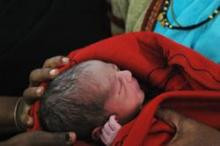
     

    Sepsis in newborns

    Thirty-eight percent of deaths in children under five years of age occur in the neonatal period—that is, the first four weeks of life—a total of four million deaths annually, three-quarters of which occur in the first week of life. Around 31% are due to infections.
    This course provides participants with guidance on key aspects of preventing and treating neonatal infections, emphasizing the detection and control of bacterial infections in secondary and community health care settings and addressing important global public health issues.

    Aim

    At the end of this course, the participant will be able to:

    • Explain the importance of newborn infections as a cause of neonatal mortality
    • List the risk factors for newborn infections and explain how they acquire them
    • Describe the differences between a newborn and a slightly older baby with respect to infections, and some of the difficulties encountered in detecting infections in newborns
    • Identify the key signs of sepsis in a newborn
    • Mention the most important strategies to prevent infections in newborns
    • Mention some of the methods and strategies that exist for the treatment of bacterial infections in newborns, in secondary health centers and in the community.
    • Explain possible programmatic methods used in the locations and in the community
    • Provide examples of key sepsis prevention and treatment programs in newborns
    Credits

    The authors would like to thank Don Thea, Department of Global Health, BUSPH, for reviewing the course and providing his insightful insights. 
    We would like to thank the people who developed and reviewed the first edition of this course in August 2009.

    Course authors:
    • Indira Narayanan, from the BASICS Project
    • Goldy Mazia, from the BASICS Project 
    • James Wolff, BASICS Project
    Technical reviewers:
    • Jim Shelton, USAID
    • Lily Kak, USAID
    • Paul Crystal, from the BASICS Project
    • Barbara Deller, ACCESS Project
    Time
    • 2 hours
    Published / Updated
    • Wednesday, October 22, 2014
    Course authors: 
    • Rachael Bonawitz, BUSPH, Center for Global Health and Developmen
    • James Wolff, BUSPH, Department of Global Health
    • Nandini Jayarajan, CCP
    • Lisa Mwaikambo, CCP
  • Key Concepts:
    • Newborns, especially preterm/low birthweight infants, are immunologically compromised and are susceptible to bacterial infection.
    • Because of this relative immunodeficiency, newborns do not localize infection.
    • Because newborns do not localize infection, neonatal sepsis presents with non-specific signs and symptoms.
    • Infections in newborns presenting in the first 72 hours are commonly acquired during labor and delivery.
    • Infections after 72 hours are frequently acquired in hospitals, at home, or in the community.
    • Most organisms that cause infection in newborns do not usually cause disease in older children or adults.
  • Key Concepts:
    • Infection in the newborn is an important problem as 30% of all neonatal deaths are caused by infection.
    • Deaths in the newborn period (first 4 weeks of life) account for about 50% of infant mortality in countries with high neonatal mortality rates.
    • Reducing deaths from newborn infections is critical to reducing infant mortality.
    • Newborns can acquire an infection in utero, during labor and delivery, and in the postpartum period.
    • Prevention and treatment interventions to reduce deaths from newborn infections should be organized around these three periods.
    • The early postnatal period is particularly important because 50% of neonatal deaths occur in the first 24 hours after birth and 75% occur within the first week after birth.
  • Key Concepts
    • During pregnancy tetanus immunization of mothers and antenatal care including counseling for early and exclusive breastfeeding, birth preparedness, and having a competent skilled birth attendant for the delivery will help to reduce newborn deaths from infection.
    • During delivery, infection control practices including hand washing, clean delivery practices including cord care and hygiene, and encouraging early and exclusive breastfeeding will also decrease neonatal deaths.
    • In the postnatal period, frequent focused postnatal visits especially in the first week after birth, counseling mothers and community health workers to recognize risk factors and features of early infection, and early treatment/referral for neonatal sepsis will help to reduce newborn deaths from infection. In addition, continued good hand hygiene and exclusive breastfeeding as well as extra support for low birth weight infants are important interventions to help reduce neonatal deaths.
  • Key Concepts
    • First level health facilities should provide quality essential newborn care including basic resuscitation and treatment of infections. Where full treatment of major infections is not feasible, babies should be referred to a suitable centre after administration of the first doses of antibiotics.
    • Newly developed and adapted Integrated Management of Neonatal and Childhood Illness (IMNCI) guidelines have become important validated tools for management of newborn infections in first-level health facilities in resource-limited settings 
    • Besides provision of quality care, courteous behavior and sensitivity for harmless, important family traditions can promote increased utilization of health services.
    • Health facilities should not function in isolation but establish links with the community and community based interventions to improve family behaviors and increase demand for services.
  • Key Concepts
    • Most deliveries in developing countries occur at home. Even when deliveries take place at facility level, mothers and babies are discharged early and spend practically all of the first 4 - 6 weeks at home. Community-based interventions for the infant’s first week of life are essential.
    • Community programs frequently provide basic care targeting behavior change focusing on prevention of neonatal infection, identification of danger signs, and appropriate care-seeking. In some areas with poor access to health services, community-based treatment of infections can help to further reduce neonatal mortality.
  • Key Concepts
    • Programs should be planned and implemented carefully using key strategies such as advocacy, supportive policies, capacity building, supervision, and procurement and maintenance of appropriate equipment, supplies and drugs for improving quality of care, and monitoring and evaluation.
    • Programs should address the three continuums of care targeting (a) pregnancy, delivery, and postpartum period, (b) the home to hospital continuum and (c) inclusion of both prevention and treatment of infections.
    • Infections should be addressed as a part of essential newborn care which in turn should be part of the larger framework of maternal and child health. However, in this process of integration, care must be taken to ensure that the newer element of newborn health does not lose its visibility among other, better known programs.
  • In this section, you can provide feedback about this course to help us make NextGenU.org better. Once evaluations are completed, you will be able to download your certificate of completion.